Devlog Wave Battler
How Wave Battler Started: A Game for the Pauses Between Tasks
Wave Battler began as a gorilla-and-balloons game to play between work tasks. How it grew into a wave survival game with two worlds: Deep Drift and Neon Grid.
Wave Battler started with a simple wish. I wanted a game I could open between work tasks, play for a few minutes, and close again. Something with battling and waves and upgrades, where you get a little stronger every round. Easy to understand, no long tutorial, and fine to pause halfway. Move with WASD, and let the game aim for you.
Before building anything I asked for research and a short plan, and a small visual example. I didn't want to overbuild something I hadn't played yet.
Version zero: a gorilla and some balloons
The first playable version was very plain. You were a gorilla, and the enemies were balloons. You walked around, the gorilla shot automatically, and the balloons kept coming in waves. Clear a wave, pick up the coins, walk to the shop, buy something, go again. It was silly and it worked. That loop is still the heart of the game today: fight a wave, shop, fight a bigger one.
Most of what came next came from playing it. When something felt off, I wrote it down and we fixed that one thing. A dash on Space. An active ability. A bonus round. A portal that skips the shop if you are in a hurry. Little things that make a short session feel fuller.
Too many worlds, then two
After a while the gorilla-and-balloons look felt too basic, and I wanted a real redesign: map, menus, characters, enemies, bullets. I got excited and picked nine worlds to build, from a cutting board to sky islands to a temple. A few of them got built.
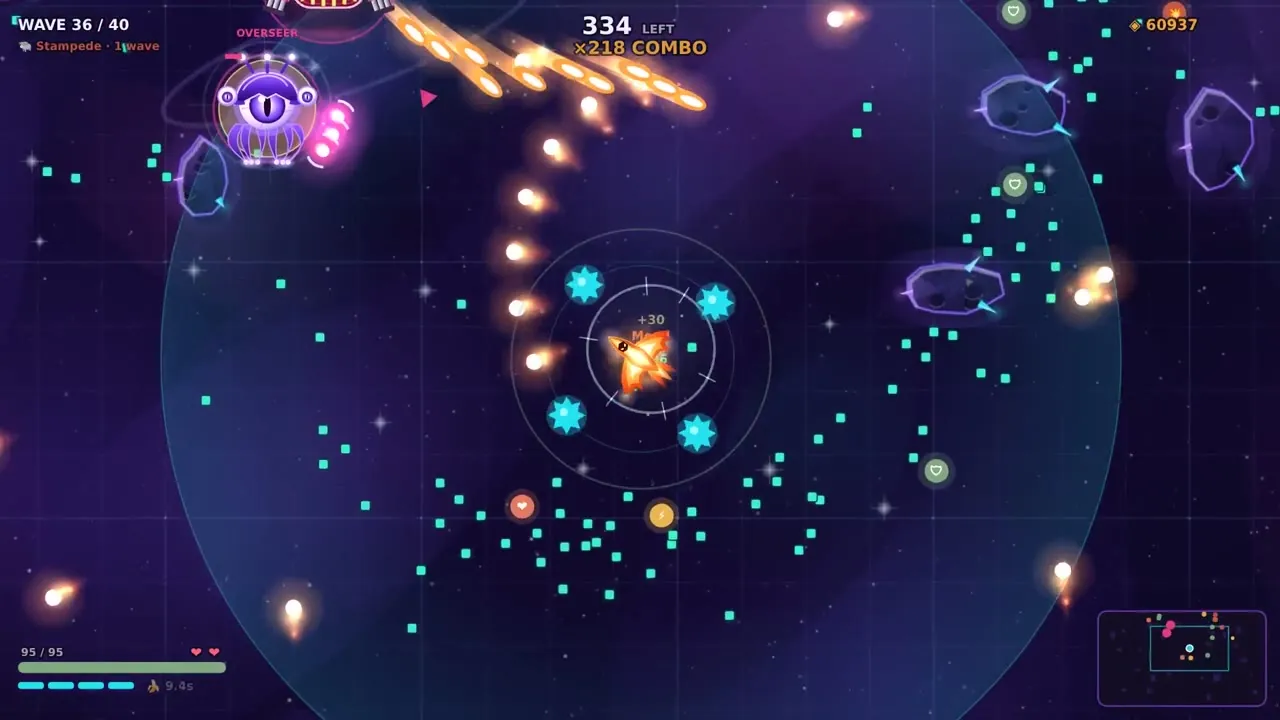
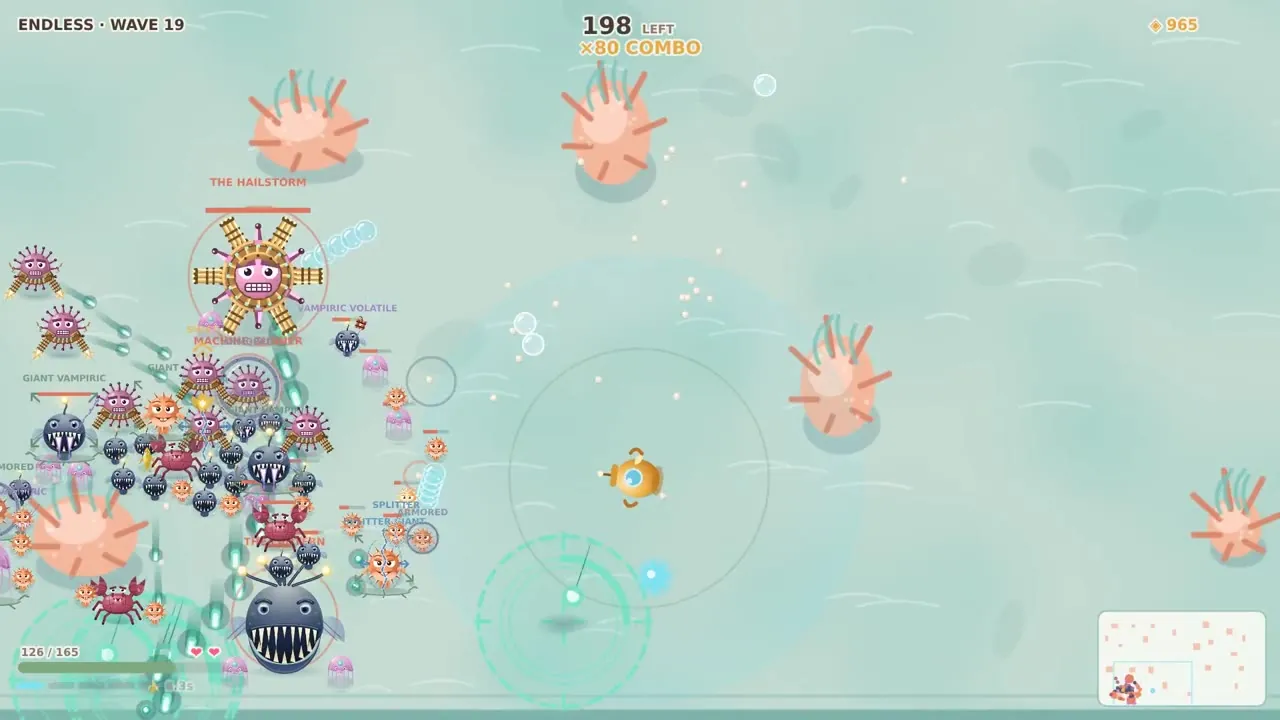
Then I played them side by side and made the hard call: keep two and make those two really good. Deep Drift is a sunny seabed. You are a little brass submarine, and the enemies are puffers, dartfish, crabs, anglerfish and jellies. I asked for the sub to point where it shoots, and to look a bit meaner, because we are fighting these things, not making friends. Neon Grid is the space map, with a glowing ship and digital enemies like the Datastream and the Network Spider.
Two worlds meant every enemy and boss could get a proper drawing on both maps, instead of nine worlds of half-finished art. It was the right trade.
Things I learned the hard way
One bug is my favourite because it was so specific to me. I live in Israel and my keyboard often has the Hebrew layout on. One day I couldn't move or pause. Arrows worked. WASD, P and F didn't. It turned out the game was reading which letter a key types, and on a Hebrew layout W is not W. The fix was to read the key's position on the keyboard instead. Now the game works on any layout, and I check that in every game I make.
The other lesson was about testing. A bot that plays the game thousands of times finds balance problems no human would notice, like a wave that could never end because the last enemy hid behind a rock. But a bot can't tell you whether something is fun. For that I still have to play it myself.
Where it is now
Since then Wave Battler has grown a lot. It has a skill tree, Devil deals you can take after the shop, ship and sub skins, special waves, reworked bosses, co-op with a friend and a world leaderboard. It runs in the browser on a computer, and on a phone held sideways with on-screen controls.
It is still meant for the same thing, though. Open it, play a few waves, feel a bit stronger, close it. If that sounds like your kind of break, you can play Wave Battler here, or read more on the game page. If you have notes, I read them. Most of the game came from notes like that.
Play it
Wave Battler is free in your browser